

If you’re reading this while rocking a baby at 3 AM… I’ve been there.
Those first weeks with a newborn are beautiful, emotional, and honestly exhausting. I remember Googling how to get my baby to sleep every night, hoping for a miracle trick.
The truth is this: newborn sleep is unpredictable. But a gentle newborn sleep routine can help your baby settle faster, sleep longer stretches, and feel more secure.
This guide walks you through everything I learned as a parent. It works for fussy babies, colicky babies, and regular newborn chaos too.
Table of Contents
- Why Newborn Sleep Is So Hard
- What Is a Newborn Sleep Routine
- When to Start a Newborn Sleep Routine
- Newborn Sleep Needs by Age
- Step-by-Step Newborn Sleep Routine
- Bedtime Routine for Newborns That Works
- Creating a Calm Sleep Environment
- Best Products That Help Newborns Sleep
- Helping a Colicky Baby Sleep Better
- Common Sleep Problems and Fixes
- Sample Newborn Bedtime Schedule
- FAQs About Newborn Sleep Routine
When to Start a Newborn Sleep Routine

If you’re wondering when to start a newborn sleep routine, the honest answer is: when feeding feels a little more settled, which for many families is around two weeks old.
But let me say something important first.
You are not late.
You are not failing.
And you do not need a perfect schedule right now.
Those first weeks are survival mode. You’re healing, learning your baby’s cries, and probably running on very little sleep. A newborn sleep routine at this stage is not about timing naps to the minute. It is about gently repeating calming steps so your baby starts to recognize what sleep feels like.
At this stage, your goals are simple.
You are aiming for gentle consistency. That might mean dimming lights before every nap, swaddling before sleep, or turning on white noise each night. It does not need to happen at the same exact time. It just needs to happen in the same order most days.
You are also building safe sleep habits. Putting baby on their back, using a firm mattress, keeping the crib clear. These habits matter far more than schedules.
And you are learning newborn sleep cues. This part changed everything for me. Once I noticed my baby’s early sleepy signs, bedtime became so much easier.
Think of this stage as planting seeds. You are not expecting perfect sleep yet. You are laying the foundation so that in a few months, your baby already knows what bedtime feels like.
That familiarity becomes comfort.
Newborn Sleep Needs by Age

Understanding how much sleep newborns actually need can save you a lot of stress.
Many of us assume babies should sleep long stretches. But newborns wake often because their tiny stomachs need frequent feeding and their sleep cycles are short.
0–4 weeks
Most newborns sleep about 14 to 17 hours in a day, but in short stretches. They wake every two to three hours to feed, day and night.
This is normal.
Your job here is not to create a strict newborn bedtime schedule. It is to watch cues, feed on demand, and keep nights calm and quiet.
5–8 weeks
Around this age, babies start having slightly longer awake periods. You might notice they stay alert for 45 to 60 minutes before getting sleepy again.
Night waking still happens often, but routines start to make more sense to them. This is when repeating your bedtime routine for newborns really starts to help.
9–12 weeks
Some babies begin sleeping one longer stretch at night, maybe four to six hours. Not all babies do, and that is okay.
This stage is when your gentle nighttime routine for baby begins to feel familiar to them. They recognize the swaddle, the white noise, the dim lights. And that familiarity helps them relax.
Every baby is different. Some sleep easily, some struggle, some are colicky or refluxy. Try not to compare your baby to anyone else. Focus on routine, not perfection.
Step-by-Step Newborn Sleep Routine
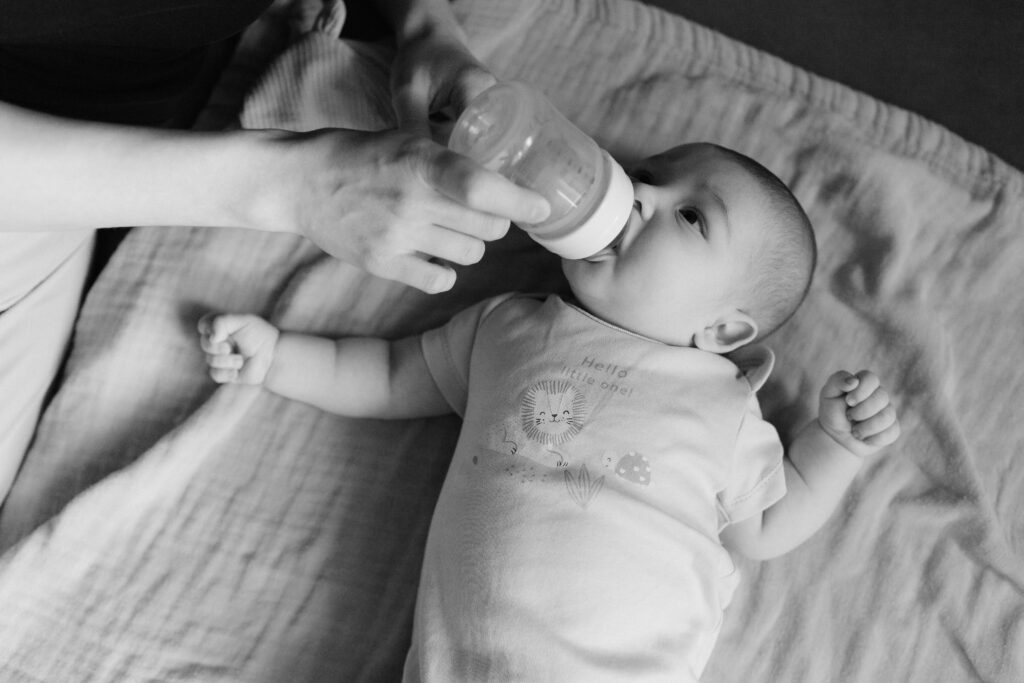
Here is the simple newborn sleep routine that helped our family survive those first months. It is not fancy. It is not rigid. It is just consistent.
1. Watch for Newborn Sleep Cues
This was the biggest lesson for me.
Do not wait until your baby is crying. By that point, they are already overtired and sleep becomes harder.
Look for small signs like red eyelids, yawning, looking away from you, or slower movements. Some babies rub their eyes or get quiet and still.
When you notice these cues, start your routine right away.
Overtired babies fight sleep, cry longer, and wake more often. Catching that sleepy window makes everything easier.
2. Feed Before Sleep
A full tummy helps babies stay asleep longer. Feeding before sleep is comforting for them too. It reminds them of being safe and warm.
Burp gently to reduce gas. If your baby struggles with colic or reflux, hold them upright for a few minutes after feeding. This small step can prevent painful wake-ups later.
Some parents also find anti-colic bottles helpful for night feeds because they reduce air intake.
3. Swaddle for Comfort
Swaddling recreates the snug feeling of the womb. It helps calm babies and reduces the startle reflex that wakes them up.
When we started swaddling consistently, our baby fell asleep faster and stayed asleep longer.
Popular swaddles many parents love include:
| Feature / Benefit | Halo SleepSack Swaddle | Love To Dream Swaddle UP | SwaddleMe Original Swaddle |
|---|---|---|---|
| Swaddle Style | Classic swaddle with adjustable wings | “Arms Up” swaddle for natural sleep | Traditional wrap swaddle with tabs |
| Ease of Use | ⭐⭐ Easy on/off with hook‑and‑loop | ⭐⭐⭐ Very intuitive “arms up” design | ⭐⭐ Simple but takes practice |
| Comfort & Sleep Quality | ⭐⭐⭐ Helps reduce startle reflex & soothe | ⭐⭐⭐ Mimics natural sleep position | ⭐⭐ Good, but tighter than others |
| Safety (Loose Blanket Replacement) | ⭐⭐⭐ Wearable and secure | ⭐⭐⭐ Wearable and secure | ⭐⭐⭐ Wearable and secure |
| Temperature Regulation | ⭐⭐ Breathable cotton options | ⭐⭐⭐ Lightweight, breathable | ⭐⭐ Standard cotton |
| Age / Stage Flexibility | ⭐⭐ Best for first few months | ⭐⭐⭐ Works from newborn to transition | ⭐⭐ Primarily newborn phase |
| Parent Favorite For… | Classic calming and peace of mind | Easiest swaddle that feels natural | Budget‑friendly standard option |
| Best For… | Babies who startle easily | Babies who like arms up & freedom | New swaddle users on a budget |
| Persuasive Reason to Buy | Trusted brand, helps more sleep with less fuss | Most comfortable & natural‑feeling swaddle — loved by parents | Affordable, effective swaddle that gets the job done |
Why You Should Buy One (Quick Takeaways)
Halo SleepSack Swaddle
- Great all‑around choice if you want a safe, trusted swaddle that helps reduce startle reflexes and encourages longer sleep.
- Adjustable wings make it easy to get the perfect snug fit every time.
Love To Dream Swaddle UP
- Excellent pick if your baby prefers freedom of movement while still feeling cozy — arms‑up design is a game changer for many families.
- One of the most comfortable swaddles out there, and often helps babies settle more quickly.
SwaddleMe Original Swaddle
- Best choice for budget‑minded shoppers who still want the benefits of swaddling.
- Straightforward design your baby will sleep well in — simple, dependable, and effective.
Quick Buying Tips
✔ If you want the highest comfort and flexibility, go with Love To Dream Swaddle UP
✔ If your priority is calming startle reflex and helping sleep better, Halo SleepSack Swaddle is a smart choice
✔ If you want a solid basic swaddle at a great price, SwaddleMe Original Swaddle delivers
Every baby prefers something different, so it may take a little trial and error.
4. Use White Noise
White noise was a lifesaver in our house.
It mimics the constant sound babies heard in the womb and helps block sudden noises like doors or dishes.
Machines like the Hatch Rest Sound Machine or Yogasleep Hushh are popular because they are easy to use and portable.
| Feature | Hatch Rest Sound Machine | Yogasleep Hushh Portable |
|---|---|---|
| Best For | Nursery bedtime routines | Travel & naps anywhere |
| Sound Options | Multiple digital sounds (white, pink, brown noise, lullabies) | 3 soothing sounds: bright white noise, deep white noise, gentle surf |
| Night Light | Multi-color programmable night light | Soft amber LED night light |
| Controls | Smartphone app + device controls | Simple buttons for one-hand operation |
| Portability | Mainly for home use | Ultra-portable with clip for stroller or car seat |
| Power | Plug-in device | USB-rechargeable battery |
| Extra Features | Scheduled routines, sound fades, customizable sleep programs | Child-lock feature and travel-friendly design |
| Why Parents Love It | Creates consistent bedtime routines and sleep training cues | Makes it easy for babies to sleep anywhere |
| Ideal Buyer | Parents building a full nursery sleep setup | Parents who travel often or need nap solutions on the go |
| Quick Buy | ⭐ Best smart nursery sound machine | ⭐ Best portable baby sound machine |
Pros and Cons
Hatch Rest Sound Machine
Pros
- Combines sound machine + night light + sleep routine automation
- App control allows customized schedules and sound transitions
- Wide range of sound options for different sleep needs
Cons
- Not very portable (designed mainly for the nursery)
- Some advanced features may require app setup
Yogasleep Hushh Portable Sound Machine
Pros
- Extremely compact and travel-friendly
- USB rechargeable with clip for stroller or car seat
- Simple controls that parents can use one-handed
Cons
- Limited sound options compared to larger machines
- Battery must be recharged periodically
Quick Takeaways
Best Overall Nursery Sound Machine:
- Hatch Rest Sound Machine
- Ideal if you want a smart sleep system with light + sound routines.
- Perfect for sleep training and consistent bedtime schedules.
Best Portable Sound Machine:
- Yogasleep Hushh Portable White Noise Machine
- Compact and lightweight with a clip for strollers, cribs, or diaper bags.
- Great for travel, daycare naps, or car rides.
Tips for Choosing the Right Sound Machine
Choose Hatch Rest if:
- You want a complete nursery sleep system
- You plan to use sleep training routines
- You like controlling everything from your phone
Choose Yogasleep Hushh if:
- You travel often with your baby
- You need quick nap solutions on the go
- You prefer a simple, portable white-noise machine
5. Rock or Hold Briefly
Gentle rocking helps babies relax. Sometimes they just need a minute of closeness.
Try to put your baby down when they are drowsy but not fully asleep. This helps them slowly learn how to fall asleep in their crib.
It does not work every time. That is okay. Newborns still need lots of comfort.
6. Keep the Room Dark and Cool
Babies sleep better in a calm space.
Aim for a comfortable temperature around 20 to 22°C. Use blackout curtains if evening sunlight keeps the room bright.
A peaceful room makes a big difference, especially during the witching hour when babies get overstimulated easily.
7. Repeat Every Time
This is the magic part.
Consistency matters more than perfection.
Your baby begins to connect the steps. Feed, swaddle, white noise, rocking, sleep.
That predictable newborn sleep routine tells their brain it is safe to relax.
And slowly, night by night, sleep becomes easier.
Bedtime Routine for Newborns That Works

When I first tried to create a newborn sleep routine, I thought bedtime had to be perfect. Same minute every night. Same steps. Same results.
Real life with a newborn does not work like that.
What does work is a short, calming pattern that your baby starts to recognize. Think of bedtime as a gentle signal. It tells your baby, “You are safe. Sleep is coming.”
Our bedtime routine looked something like this:
We gave a short warm bath if baby was fussy that evening. Not every night. Just when it helped. After that I would do a quick baby massage with lotion, dim the lights, feed, burp, swaddle, turn on white noise, rock for a minute, then lay baby down.
Some nights it took 10 minutes. Some nights it took 40. That is normal.
The key is repeating the same steps most nights so your baby begins to connect those actions with sleep. Over time, your baby will start relaxing as soon as the routine begins.
Keep bedtime simple. A newborn does not need a long routine. Fifteen to twenty minutes is enough.
Try to start bedtime around the same time each night, even if sleep still happens in short stretches. That gentle consistency helps build your newborn bedtime schedule without stress.
Remember, you are not trying to force sleep. You are teaching your baby what bedtime feels like.
And one day, you will notice your baby getting sleepy as soon as you dim the lights. That is when your routine starts working.
Creating a Calm Sleep Environment
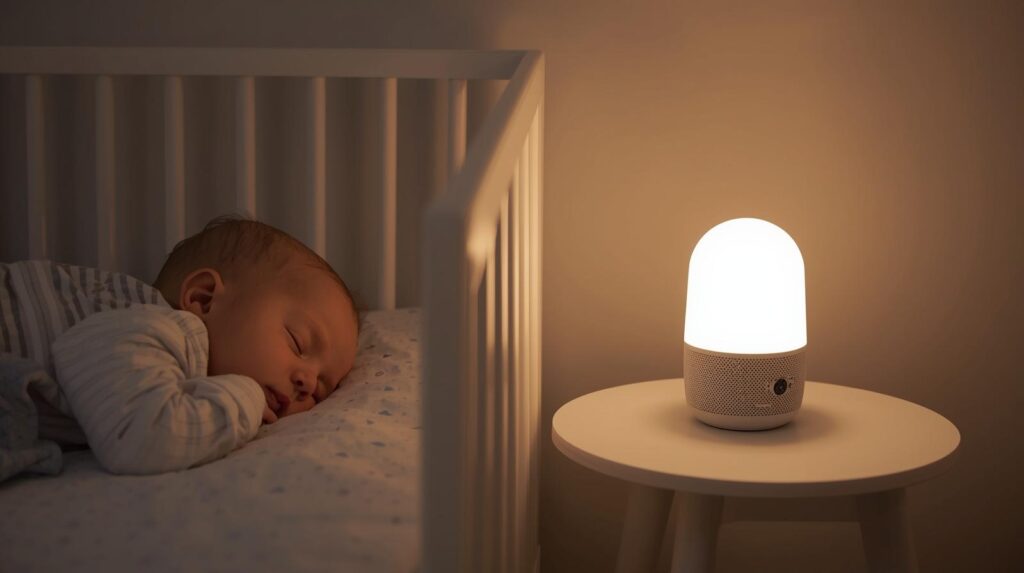
A peaceful room makes a huge difference in how easily a baby settles.
When my baby would not sleep, I kept changing routines, rocking styles, feeding times. What finally helped was fixing the sleep space.
Babies sleep better when their environment feels safe and boring.
Start with a firm crib or bassinet mattress and fitted breathable sheets. Keep the crib empty. No pillows, blankets, or toys. Safe sleep matters more than anything.
Make the room dark. Not pitch black if that scares you, but dim enough that baby knows it is night. Blackout curtains helped us more than I expected.
White noise became our best friend. It masks barking dogs, siblings playing, and door noises. It also reminds babies of the sounds they heard in the womb.
Keep the room comfortably cool. Around 20 to 22°C works for most babies. If you are comfortable in a light sweater, baby is probably comfortable too.
Bassinets that rock gently or play white noise can be helpful for some families. Many parents like options from brands like Graco or soothing bassinets from Fisher-Price because they fit in small bedrooms and keep baby close. Learn more about these products below.
Graco SmartSense Soothing Baby Bassinet
Quick Summary:
- A smart bassinet that detects your baby’s cries and automatically responds with soothing motion, sound, and vibration to help calm them back to sleep.
- Designed for newborns up to about 6 months, making nighttime care easier for tired parents.
Why You Should Buy It:
- Automatically soothes crying babies, giving parents extra rest at night.
- Combines motion, white noise, and vibration to help babies fall asleep faster.
- Creates a consistent, calming sleep environment for newborns.
Key Features:
- Cry-detection technology that activates soothing automatically
- Gentle rocking motion to comfort baby
- Built-in white noise and soothing sounds
- Vibration settings for extra calming
- Breathable mesh sides for airflow and visibility
- Suitable for newborns up to 6 months
Pros:
- Helps calm babies without constant parent intervention
- Multiple soothing options to find what works best
- Breathable and safe sleep design
Cons:
- Higher price than basic bassinets
- Only usable during the early months of infancy
Fisher‑Price Soothing Motions Bassinet – Sweet Snugamonkey
Quick Summary:
- A cozy bedside bassinet designed to help newborns sleep better with gentle swaying motion, soothing music, vibrations, and soft lights.
- It creates a calming sleep environment while keeping your baby close during the early months.
Why You Should Buy It:
- Multiple soothing features help babies relax and fall asleep faster.
- Gentle sway motion mimics natural rocking that comforts newborns.
- Combines sound, light, vibration, and motion in one sleep solution.
Key Features:
- Gentle sway motion that moves with baby or with a gentle push
- Music, nature sounds, and vibrations for calming sleep
- Dual-mode lighting with night light and ceiling projection
- Overhead toy mobile for visual stimulation
- Flat sleeping surface designed for newborn comfort
- Removable soothing unit that can be used as a tabletop soother
- Suitable for babies from birth up to about 20 lbs
Pros:
- Multiple soothing options in one bassinet
- Gentle rocking helps comfort fussy babies
- Night light and projection useful for nighttime care
Cons:
- Limited use once baby grows or starts rolling
- Some features run on a timer
Quick Takeaway:
- A great choice if you want a feature-packed bassinet that combines rocking, sound, lights, and vibration to help soothe newborns to sleep.
The goal is not fancy gear. The goal is a calm, safe, predictable sleep space your baby recognizes every night.
Best Products That Help Newborns Sleep

Let me say this first. No product will magically fix newborn sleep.
But the right tools can make your newborn sleep routine easier and less stressful.
Swaddles were a lifesaver for us. Newborns have a strong startle reflex, and swaddling helps them feel secure like they were in the womb. Many parents love swaddles like Halo, Love To Dream, or SwaddleMe because they are easy to use when you are tired at 2 AM.
HALO SleepSack Swaddles
Here are 3 key features/benefits of the HALO SleepSack Swaddle:
- 3-Way Adjustable Swaddle Design – Allows babies to sleep arms-in, hands-to-face, or arms-out, making it easier to match your baby’s preferred sleep style and transition out of swaddling.
- Safer Sleep Alternative to Loose Blankets – The wearable blanket design helps keep babies warm without loose bedding that could cover their face, supporting safer sleep.
- Reduces Startle Reflex for Better Sleep – The adjustable swaddle wrap keeps baby snug, helping minimize the Moro (startle) reflex so babies can sleep longer and more peacefully.
White noise machines also helped our baby stay asleep longer. Popular ones like Hatch Baby or Yogasleep are simple to use and adjustable.
Soft night lights are helpful during feeds so you do not fully wake the baby. A comfortable rocker or glider can save your back during night feeds.
If gas is waking your baby, anti-colic bottles might help. Parents often try Dr. Brown’s, Philips Avent, or Comotomo to reduce air intake.
Helping a Colicky Baby Sleep Better

If your baby has colic, bedtime can feel heartbreaking.
You feed, burp, rock, sing, and your baby still cries. You start wondering if you are doing something wrong.
You are not.
Colic is real, and it is exhausting.
Some small changes can help a colicky baby sleep better. Feeding in an upright position, burping more often, and keeping baby upright after feeds can reduce gas. Gentle bicycle leg movements or a warm bath before your nighttime routine for baby can calm them.
Babywearing during the day helped my baby nap longer and cry less at night. White noise also helped drown out stimulation.
If your baby has these signs:
• Crying more than 3 hours a day
• Same time every evening
• Hard to soothe
Try:
• Upright feeding
• Extra burping
• Bicycle legs for gas
• Warm bath
• White noise
• Babywearing
If crying is severe or your baby arches their back during feeds, talk to your doctor. Reflux or milk sensitivity can sometimes be the cause.
Most of all, take care of yourself. Ask for help. Step outside for a minute if you feel overwhelmed. Colic does pass, even if it feels endless right now.
Common Sleep Problems and Fixes
Baby Only Sleeps When Held
Try putting down drowsy but awake.
Start with one nap per day.
Baby Wakes After 20 Minutes
Baby may be overtired.
Watch sleep cues earlier.
Baby Confuses Day and Night
Keep daytime bright and noisy.
Keep night quiet and dark.
Baby Cries After Feeding
Check for gas.
Try anti-colic bottles or slower flow nipples.
There is no perfect routine. Just small adjustments that make sleep easier over time.
Sample Newborn Bedtime Schedule
This is flexible.
7:00 PM feed
7:15 swaddle
7:20 rocking
7:30 bed
10:30 PM feed
1:30 AM feed
4:30 AM feed
Adjust based on your baby. Some babies sleep longer. Some wake more. Both are normal.
Focus on repeating your routine rather than forcing exact times. Your baby will slowly stretch sleep when they are ready.
FAQs About Newborn Sleep Routine
How long should a newborn sleep at night?
Usually 2–4 hours at a time.
Can you sleep train a newborn?
No. Focus on routine and comfort.
When do babies sleep through the night?
Around 4–6 months for many babies.
What if my newborn only sleeps in my arms?
Normal. Start small with one crib nap daily.
Does swaddling help colic?
It can reduce fussiness but does not cure colic.
Final Thoughts
You are not failing.
Newborn sleep is hard for everyone.
But a gentle newborn sleep routine gives your baby comfort and gives you hope.
Start simple. Stay consistent. Adjust as needed.
And remember… this phase will pass.
Pingback: 6 Reasons Why a Newborn Won’t Sleep at Night - Hush Dear Baby