
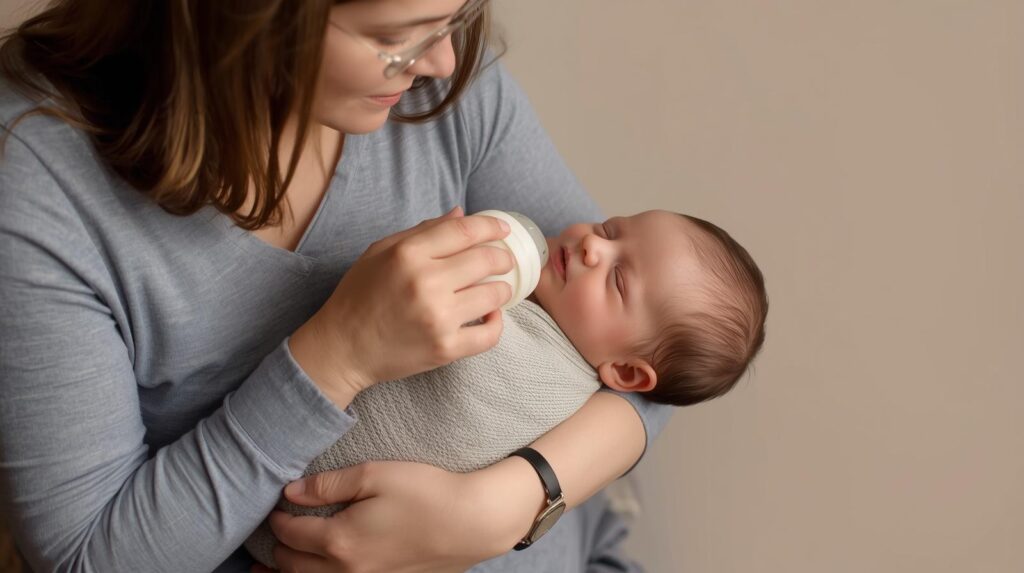
There’s a common sleep question that almost every new parent asks at some point:
“Does feeding newborn to sleep help them sleep better?”
If you’re here because you’re exhausted, feeding your baby around the clock, and wondering if what you’re doing is helping or hurting sleep—welcome. I’ve been there too. The endless midnight feeds, the groggy mornings, the dreamy hope that just one more sleep technique will finally produce a peaceful night.
In this post, we’re going to explore:
- How feeding newborn to sleep affects sleep patterns
- Whether it creates good or bad habits
- The difference between hunger and comfort sleep
- How to make feeding and sleep work together
- Tools and products that help babies fall asleep (and stay asleep)
- What experts say
- Practical tips for parents
By the end, you’ll understand not just whether feeding impacts sleep, but how and why it matters—and you’ll have clear, proven strategies to make nights more manageable without shame or pressure.
Why Feeding and Sleep Are So Closely Linked

Many babies naturally fall asleep while being fed. This is not a coincidence—it’s instinctive.
During the first few months, your baby’s brain and body are wired to associate feeding with comfort, warmth, and safety. In the womb, they were comforted by your heartbeat and warmth. After birth, your milk and your touch are the closest thing to that.
Feeding newborn to sleep often works because:
- It releases calming hormones in the baby (like oxytocin)
- It mimics the rhythm and closeness of the womb
- It satisfies hunger first, making rest easier
- It provides a predictable sequence before naps or bedtime
For many parents, feeding becomes the first part of their newborn bedtime routine, especially in the first 8–12 weeks.
But this isn’t the whole story.
Does Feeding Newborn to Sleep Actually Work?
The short answer?
Yes. Feeding newborn to sleep does work for most babies, especially in the first few months.
The longer, more helpful answer is this:
Feeding newborn to sleep helps your baby relax and fall asleep more easily, but it does not guarantee longer sleep stretches on its own.
Why? Because sleep quality and duration are influenced by more than hunger—things like overtiredness, environment, comfort, and day/night rhythms also play a role.
Still, for many families, feeding newborn to sleep is a comforting, natural, and effective way to help babies settle, especially in the early weeks.
Morning vs Night Feeding: What’s the Difference?
Feeding during the day and feeding at night are not the same.
In the daytime, feeds often:
- Happen in brighter light
- Are more interactive
- Encourage digestion and alertness
At night, feeding newborn to sleep usually happens:
- In dim lighting
- In a calm environment
- With minimal stimulation
This difference helps signal to your baby that nighttime is for quiet and rest. Many parents find that keeping feeds quiet and calm at night improves sleep quality more than trying elaborate sleep training techniques.
Breastfeeding and Newborn Sleep
Breastfeeding releases hormones like oxytocin (in both parent and baby) that encourage relaxation and bonding. It’s a beautiful connection.
Pros of breastfeeding before sleep:
- Helps baby feel full and calm
- Releases calming hormones
- Is a natural sleep cue
- Can be done anywhere
Things to watch:
- Some babies never fully wake up during feeds and fall asleep too quickly
- Frequent feeding can be exhausting for parents
- Babies may crave feeding for comfort, not hunger
For many breastfeeding parents, feeding newborn to sleep is normal and natural. Over time, most babies begin to associate gentle cues (like dim lights, swaddling, and soft touch) with sleep, not only the feed itself.
Bottle Feeding and Newborn Sleep
Whether you use formula or pumped breastmilk, feeding newborn to sleep by bottle works on the same principle: comfort, closeness, and satisfaction.
There are advantages with bottles:
- You can track how much your baby drank
- Partners can help with night feeds
- You can try anti-colic bottles that reduce gas, which in turn leads to calmer sleep
Many parents love bottles like:
- Dr. Brown’s Natural Flow
- Philips Avent Anti-Colic
- Comotomo Silicone Baby Bottles
Using a bottle can make feeding newborn to sleep a shared responsibility, which can reduce parent fatigue and newborn sleep deprivation.
The Science Behind Feeding and Sleep

Babies are biologically programmed to feed first, sleep second.
Hunger is a wake-promoting signal in the brain. When a baby’s stomach empties, their autonomic nervous system (the part that controls alertness) kicks in.
Once full, levels of certain hormones shift and the baby becomes more relaxed, making sleep easier. That is why feeding newborn to sleep often works so well.
But sleep also depends on:
- Circadian rhythm development
- Sleep cues
- Environment
- Wake windows
- Comfort level
Feeding helps with one piece of the puzzle, but it does not create a complete sleep system on its own.
When Feeding Doesn’t Help Sleep
Sometimes feeding newborn to sleep doesn’t work the way parents expect.
Here are some reasons it may not help:
1. Baby is Overtired
If your baby stayed awake too long before the feed, they may have passed the sleep window where feeding can help.
2. Gas or Discomfort
Swallowed air, reflux, or mild colic can make feeding an uncomfortable experience, so feeding and falling asleep don’t go hand in hand.
3. Environmental Distractions
A noisy room, bright light, or too much stimulation before bedtime can override feeding as a sleep cue.
4. Energy Misalignment
If your baby is overtired or overstimulated, feeding may slow them down briefly but not help them sleep long.
Understanding these reasons helps you adjust and make feeding work for sleep again.
Signs Your Baby Is Eating, Not Sleeping
It’s easy to confuse comfort sleep with true sleep.
Here are signs that your baby is falling asleep because of feeding, and not because they are truly ready for sleep:
- Their eyes close quickly but open again soon
- They startle easily
- They wake soon after being put down
- They seem calm while feeding but restless otherwise
If you notice this pattern, you can use feeding as part of a bedtime routine without relying on it exclusively.
How to Help Your Baby Learn to Sleep Without Feeding Every Time
Eventually, most parents want babies to fall asleep with a combination of comfort and independence.
Here are gentle steps:
Create a Wind-Down Routine
Feed → Burp → Dim Lights → White Noise → Swaddle → Bed
Over time, the routine itself becomes a sleep cue.
Feed at the Beginning of Sleepiness
Don’t wait until your baby is overtired and struggling to feed.
Gradually Put Baby Down Drowsy
Drowsy, not fully asleep. This helps them learn to settle.
Use White Noise
Consistent sound helps babies connect sleep, not just feeding, with rest.
What Experts Say About Feeding Newborn to Sleep
Pediatric sleep experts agree that feeding newborn to sleep can be used as part of a calming routine, especially in the first few months. They also recommend:
- Watching for sleep cues early
- Avoiding overfeeding just to induce sleep
- Supporting safe sleep practices
- Gradually introducing other cues beyond feeding
This balanced approach helps babies learn healthy sleep habits without forcing a strict schedule.
Tools That Can Help Turn Feeding Into a Sleep Cue
Feeding newborn to sleep becomes more effective when paired with helpful tools that signal sleep:
White Noise Machine
A consistent sound helps mask sudden disruptions and signals rest.
Blackout Curtains
Dim lighting reinforces day/night difference.
Comfortable Glider Chair
Your body stays supported during long feeds.
Swaddles
Reduce startle reflex and help babies feel secure.
Anti-Colic Bottles
Smooth feeding can reduce discomfort that interrupts sleep.
These tools don’t replace feeding, but they make sleep easier when feeding is part of the routine.
A Sample Nighttime Routine That Works
Many parents find success with a consistent pattern that feels calm and predictable:
- Feed 30–45 minutes before desired sleep time
- Burp thoroughly
- Dim the lights
- Use white noise
- Swaddle if your baby likes it
- Rock or cuddle briefly
- Lay down drowsy, not fully asleep
This helps your baby associate these steps, not just the feed, with bedtime.
Common Mistakes Parents Make Around Feeding and Sleep
Feeding newborn to sleep can help, but here are common pitfalls:
- Waiting until baby cries hard before feeding
- Using feeding as the only sleep cue
- Overstimulation right before bedtime
- Inconsistent routines
- Expecting feeding alone to fix sleep issues
Avoiding these improves outcomes over time.
When to Talk to Your Pediatrician
If your baby consistently struggles with sleep despite varied routines, and you notice:
- Severe reflux
- Refusal to feed
- Poor weight gain
- Constant discomfort
Talk to your pediatrician. Sleep issues are usually normal, but sometimes an underlying condition affects comfort and feeding.
Final Thoughts
Feeding and sleep are naturally connected, especially in the earliest months. Feeding newborn to sleep doesn’t have to be a problem—it can be a starting point for comfort and rest.
Over time, as your baby’s nervous system matures, they will learn additional sleep cues. Feeding becomes part of a larger, gentle sleep routine.
Sleep won’t be perfect right away. But with loving consistency and practical habits, you can support both better rest and a strong parent-baby bond.
You’re doing an amazing job. Hang in there.